Talon David 'Villain' - The Art of Self-Definition
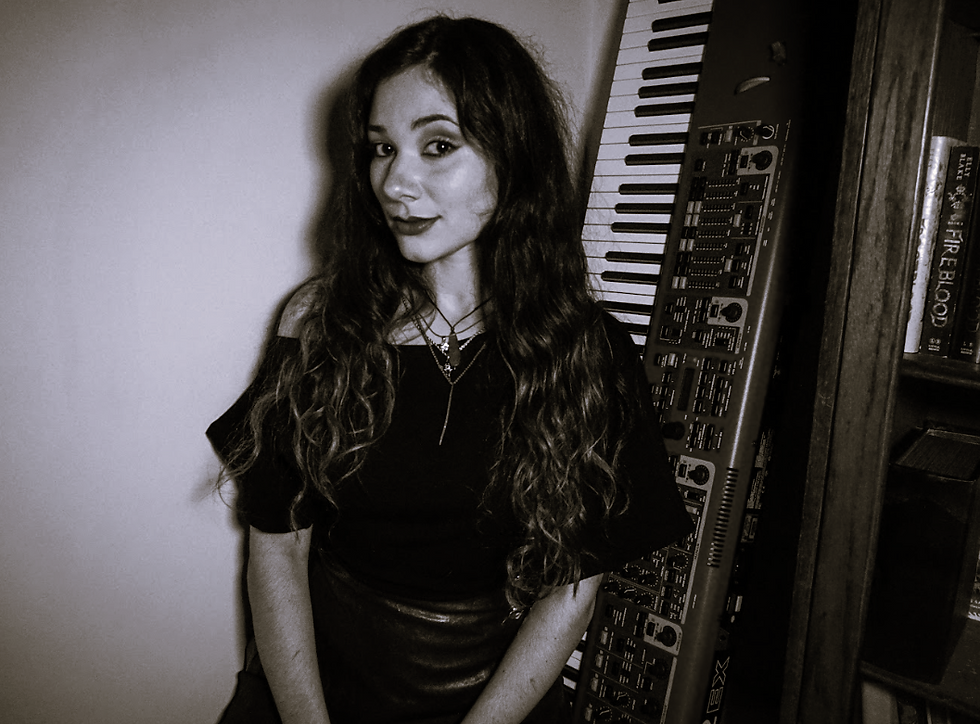
The central conceit of Talon David’s Villain is deceptively familiar: the artist who has been misunderstood decides to reclaim the label. What makes the album interesting is the extent to which David refuses to leave that idea at the level of metaphor. The villain becomes a structural principle, allowing songs about professional conflict, grief, romantic uncertainty, loneliness and friendship to exist within the same narrative framework. Villain is therefore less a revenge album than an examination of authorship, asking who has the authority to determine the meaning of another person’s behavior.
The record’s opening statement, “Make Me the Villain,” provides the origin story. Written after David was scapegoated by music industry promoters, the song establishes antagonism as something produced by competing narratives. From that point forward, the album repeatedly complicates the distinction between victim and antagonist. “I Wish You Well” suggests that ending a relationship can look cruel while being an act of honesty. “Hero Is a-Slitherin'” questions the reliability of external labels. “Better Friend” exposes the unstable boundary between friendship and competition.
Musically, David translates this conceptual instability into formal variety. Alternative rock, neo-soul, funk, house, retro R&B, reggae-pop and dark pop appear not as disconnected genre exercises but as changes in dramatic perspective. “Ghosted” uses funk to make frustration kinetic. “Where Goodness Grows” adopts a slower, more dystopian atmosphere. “Neverland” moves toward dreamlike neo-soul textures. The record’s genre fluidity consequently becomes part of its argument: identity itself is unstable when viewed from different angles.
The most effective interruption of the concept is “Mosaic (All of You).” Its piano-led arrangement and exposed lyricism temporarily remove the album’s theatrical scaffolding. Here, David is not constructing another character but confronting loneliness directly. The song complicates the confidence elsewhere on the record, suggesting that self-definition does not eliminate vulnerability. “Inner Banshee,” shaped by grief following her grandmother’s death, similarly reveals the emotional circumstances behind the album’s restless need for movement.
David’s unusually complete creative control reinforces the album’s interest in authorship. As writer, producer, arranger, engineer and performer, she controls almost every stage of the record while bringing in additional musicians to expand its sonic vocabulary. Her background in acting and audiobook narration further explains the album’s emphasis on character and dramatic perspective. Villain occasionally risks excess, but its excess is integral to its thesis. This is an artist refusing to make herself smaller simply to become easier to interpret.
By the closing “Last of My Kind,” the album’s argument has shifted from defense to liberation. David no longer needs to establish that she is good, misunderstood, or unfairly judged. Those categories have become beside the point. The more radical proposition is that an artist can reject the narrative altogether and construct another one. Villain makes that rejection audible, turning personal conflict into a deliberately expansive work about identity, perception and the freedom of becoming impossible to define.
Find Talon David: Instagram, Spotify, Website | PR: Danielle Holian, Decent Music PR


Comments