Riley Max ‘What It Takes’ - A Coming-of-Age Story Told Through Fourteen Songs

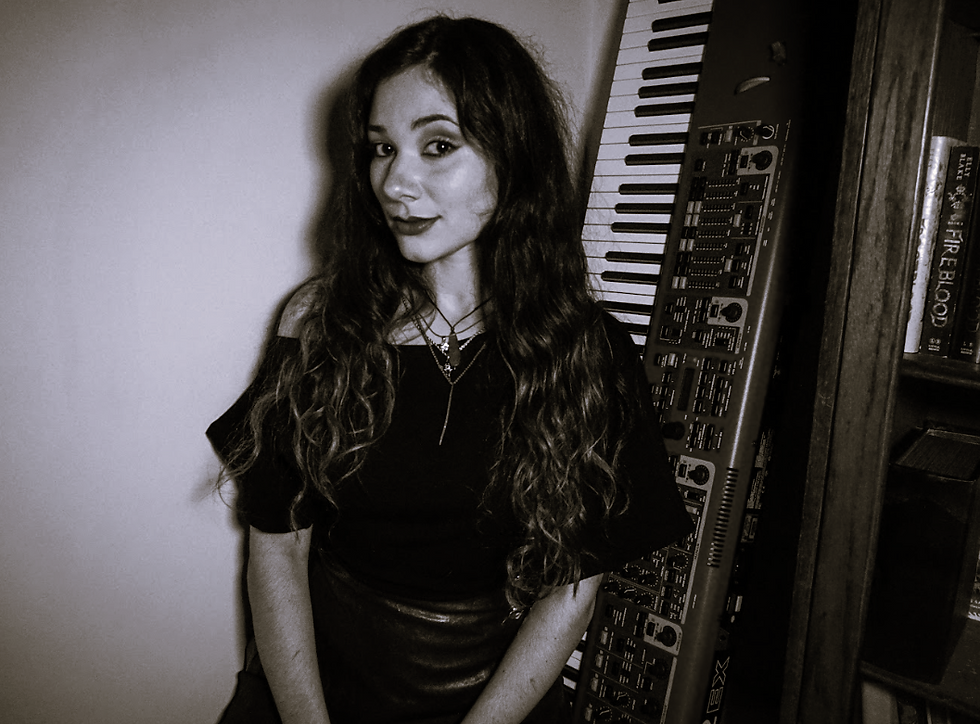
At just 21 years old, Riley Max has already begun to turn the complicated process of growing up into a body of work that feels remarkably lived in. Born in Colorado and now based in New York, the singer-songwriter and multimedia artist approaches her second album, What It Takes, as both a musical collection and a personal archive, tracing five years of change through fourteen songs that explore identity, connection, love, loss and the uncertainty that accompanies becoming an adult. Set for release on October 2nd, the album arrives as an intimate portrait of an artist learning how to look inward with increasing honesty. Where her debut album, ROY G BIV, was recorded when she was just 18, What It Takes captures the years that followed, reflecting the shifting emotional landscape of early adulthood and the experiences that cannot always be understood until they have been lived through. There is something particularly compelling about an artist documenting that transition in real time, allowing the music to preserve not only what happened, but who she was while it was happening.
The album’s emotional world is rooted in the instability of change. Friendships dissolve, relationships evolve, new connections emerge and old versions of ourselves gradually become difficult to recognise. Riley does not approach these experiences with the distance of someone trying to create a perfectly resolved narrative. Instead, What It Takes embraces uncertainty, vulnerability and contradiction. Mental health struggles sit alongside moments of love and discovery, while questions of intimacy and belonging exist alongside the inevitable loneliness of growing into yourself. That honesty becomes one of the album’s defining artistic qualities. Riley describes the record as an attempt to become better at writing about herself rather than simply creating characters, and that distinction feels central to understanding the project. These songs are not merely stories about coming of age. They are documents of the process itself, capturing moments of emotional immediacy before they have been polished into something easier to understand. The result is a record that feels less like a retrospective and more like a collection of memories still carrying their original emotional temperature.
That sense of immediacy is also reflected in the way What It Takes was created. Written and recorded across dorm rooms, college studios, Riley’s family home and other spaces, the album carries with it a fascinating sense of place. Rather than being shaped entirely within a single controlled studio environment, its songs emerged from different chapters of Riley’s life, allowing the circumstances surrounding their creation to become part of the music’s identity. She has spoken about wanting to preserve the spontaneity of the process, with some songs written and recorded almost in the same breath, responding to inspiration as it arrived. There is an artistic bravery in allowing that kind of immediacy to remain intact. Instead of smoothing every rough edge, Riley has chosen to preserve the connection between the song and the moment that inspired it. Listening back therefore becomes an act of recollection for the artist herself. Each track carries not only its own musical identity, but the emotional geography of where and when it was created.
Riley’s creative life extends well beyond the boundaries of the singer-songwriter tradition, and that broader artistic perspective gives What It Takes another layer of depth. A rising senior at Harvard University studying Art, Film and Visual Studies, she is also the music director of The Harvard-Radcliffe Veritones, performs in musical theatre productions and has developed her storytelling skills through cover art, comics and her work with the Harvard Independent. Her fascination with narrative can be traced back to an early love of 90s romantic comedies and an upbringing surrounded by 80s music, influences that help explain her instinct to treat songwriting as part of a larger storytelling practice. That multidisciplinary approach is already feeding into her future work, including an undergraduate thesis that will take the form of a fully animated short film. In this context, What It Takes feels like more than the latest chapter in a music career. It is part of a much wider creative language in which music, visual art, character, memory and narrative continually overlap.
Ultimately, What It Takes finds its power in the gap between who we are and who we are becoming. Riley Max has created an album that does not attempt to present growing up as a clean progression from uncertainty to certainty. Instead, it recognises coming of age as a collection of unfinished conversations, changing relationships, private struggles, unexpected connections and memories that gain new meaning with time. Her influences may place her in conversation with artists such as Maggie Rogers and Joni Mitchell, but the specificity of her own experiences gives the album its strongest identity. Five years of writing have allowed Riley to document an unusually formative period of her life, and the result is a record that feels deeply personal without closing itself off from the listener. What It Takes is ultimately about learning how to put yourself on the page, accepting the vulnerability that comes with doing so, and discovering that the moments we experience most privately can sometimes become the ones that connect us most deeply with others.


Comments